
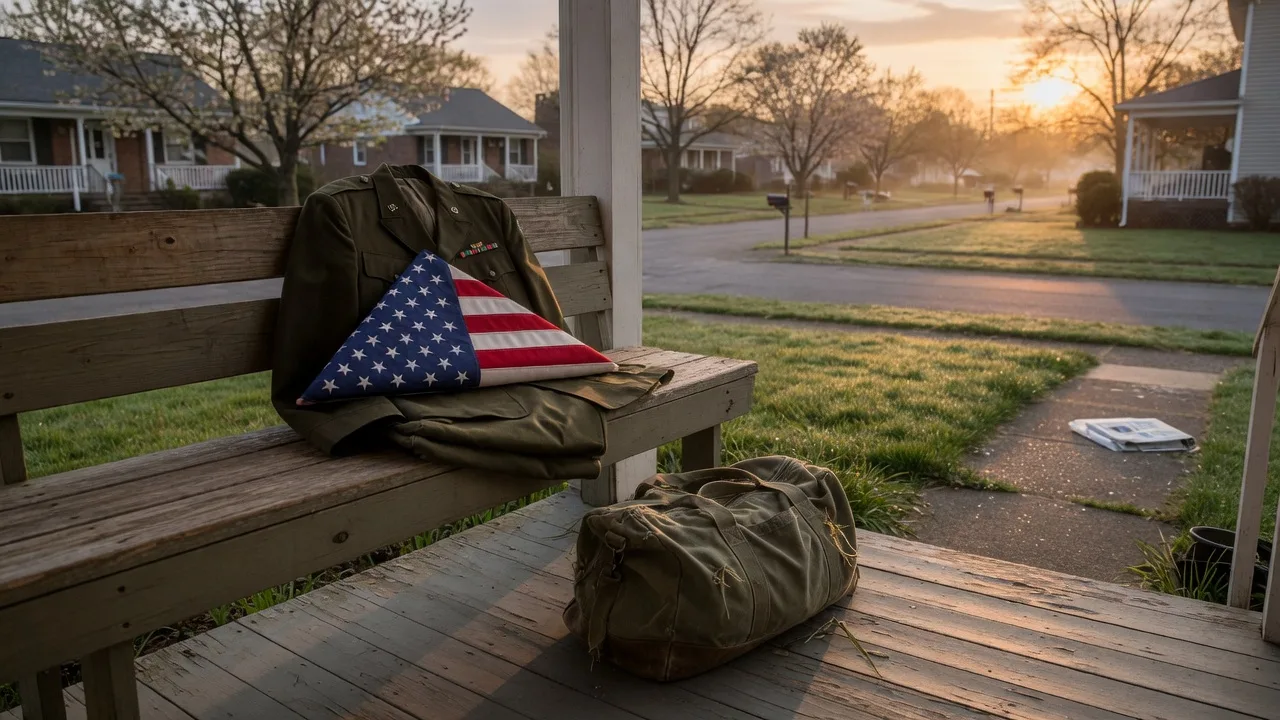
If you are reading this on the edge of a separation date, you already know the transition is arriving. What you may not expect is how it feels. You are closing one of the most defining chapters of your life, a chapter with a mission, a rank, a uniform, and people who understood your world without explanation. Walking away from that, even when it is your choice, even when you are thrilled about what comes next, carries real weight. This article gives that weight a name, offers honest steps for carrying it, and ends with an invitation: when you are ready, Patricia is here to help with the housing side of your new beginning.
The Mixed Emotions: Pride and Grief at the Same Time
The most surprising thing about leaving active duty is that the big feelings arrive together, not in sequence. On the same day you can feel a surge of pride in what you have done, relief that the constant demands are ending, grief for the life you are leaving, excitement about the freedom ahead, and a quiet, unnameable uncertainty about the person you are becoming. None of those feelings cancel another one out. Feeling sad does not make you ungrateful for your service, and feeling excited does not mean you did not love it.
Society often tells veterans the reverse: that the only acceptable emotion on the way out is gratitude, or that leaving should feel purely triumphant. The people who transition smoothest are usually the ones who refuse that version and give every feeling room. You served honorably, and you are also allowed to grieve the ending. Those two truths sit side by side, and honoring both is the first honest step of the transition.
A gentle rule for the early months: when a wave of emotion arrives, do not argue with it. Name it if you can, breathe through it, and tell someone you trust. Feelings that get talked about move through faster than feelings that get packed away with the boxes.
When the Structure Disappears: Identity Beyond the Uniform
Military life runs on structure: a daily schedule you did not have to invent, a uniform that told the world who you were, a rank that mapped your place in the room, and orders that answered the question of what you were doing and why. On the first civilian morning, much of that structure simply stops, and many veterans describe the same sensation: the day feels suddenly, unsettlingly open.
That openness hits hardest where identity lived. For years, part of your sense of self came from the team you belonged to and the mission you served. When that identifier disappears, the question, who am I now, can feel louder than any other. It is a real question, and it deserves time. You are not starting over from nothing: the same discipline, judgment, and loyalty that carried you through service are still yours, and they will reappear in civilian form. Veteran civilians are not less than service members; they are service members who have traded one mission for the next.
Missing the Mission and the Camaraderie
What veterans miss most is rarely the hard parts. It is the mission and the people: showing up beside people who would carry you, doing work that mattered to everyone in the room, and being known without explanation. In civilian life, no one gives you a battle rhythm, and the people around you often have no shared frame of reference for what your last years looked like. The silence on the other side can feel enormous, and it is a form of grief, not weakness.
The coping mechanism is connection, and it works. The military community does not end on your last day of service; it becomes the veteran community, and it is everywhere, including right where you may be moving. Fort Belvoir and the National Capital Region hold one of the densest concentrations of military and veteran families in the country, which means neighbors who wave at you from their driveway have been where you are. That is a quieter form of the same camaraderie, and it is waiting for you.
Practical Steps to Make the Transition Smoother
The emotional work of the transition happens alongside a practical one, and the two support each other. A solid plan makes the emotions less overwhelming, and emotional steadiness makes the plan easier to keep. These steps are the ones Patricia sees veterans and their families use most successfully, starting months before separation and continuing well after.
Start With Your Transition Assistance Program (TAP)
The military's Transition Assistance Program, run by the Department of Defense with the VA, the Department of Labor, and other agencies, walks separating service members through benefits, education, finances, and the civilian job search. For most members who served at least 180 continuous days on active duty, TAP is mandatory, and it is designed to begin no later than 365 days before separation, with retirees encouraged to start up to two years ahead. The curriculum changes over time, so confirm the current format, counseling options, and deadlines with your installation's transition office or the official DoD TAP site rather than relying on what a battle buddy remembers from years ago. Whether it is your first enlistment or your twentieth year, treat TAP as a benefit to use fully, not a box to check.
Build a Routine on Purpose
On active duty, the routine carried you. In civilian life, you get to build it, and the people who do well start early. Literally schedule your first weeks: when you wake, how you exercise, what you do for work or school, how you spend your evenings. A written routine does two things at once: it fills the unfamiliar openness of civilian days with dependable structure, and it gives your family a steady rhythm to anchor on when everything else is changing.
Keep a deliberate wake-up time. The military's early mornings are a habit worth keeping; a fixed start to the day stabilizes everything after it.
Keep moving. PT was never really about the PT. Exercise remains one of the most reliable mood stabilizers during any transition.
Plan one anchor a day. A single fixed point each day, a meal with your family, a walk, a call to a friend, keeps civilian days from dissolving into each other.
Stay Connected to the Military Community
The camaraderie you miss is not gone; it has relocated. Veteran service organizations, unit alumni groups, military spouse networks, and national groups like the American Legion or VFW all keep the community alive in civilian form, and many have active chapters right in Northern Virginia. If you are PCSing or moving to a new area, introduce yourself to the local veteran community early, before you need them, and you will be surprised how quickly it feels familiar. Your spouse and kids deserve the same connections, so look for military family and spouse groups in your new community too.
New to the area? The Compare Communities hub puts the neighborhoods families actually choose around Fort Belvoir side by side, so you can pick a place where community, commute, and schools line up with your new life.
Give Yourself Time and Grace
Transitions are measured in seasons, not days. Your first civilian job, first veteran's day, first anniversary of separation, these milestones will bump against the old life in unexpected ways, and that is not a setback, it is the normal shape of change. Compare yourself to where you were a season ago, not to a peer who seems further along, and remember that most people you admire from a distance are also still figuring it out. If your timeline is slower than you expected, that is information, not failure.
Know the Signs It Is Time to Talk to Someone
Asking for help is a strength the military actually teaches, even if it does not always advertise it. It is common, and it is okay, to feel lost, angry, or low for months after separation. It is time to reach out when those feelings start to run your days: trouble sleeping that will not lift, withdrawing from people you care about, irritability that is hurting your relationships, heavy drinking, or thoughts that you would never have voiced a year ago. Help is close, and it is free or low cost in most cases:
Military OneSource offers confidential support and counseling to service members and their families at no cost, before and after separation.
VA Vet Centers provide free readjustment counseling for veterans and their families in community settings, staffed by people who understand military life.
VA and TRICARE both cover mental health care, and your former unit's chaplains often remain available after you separate.
In a crisis right now: the Veterans Crisis Line is available 24/7. Call or text 988 and press 1, or text 838255. You matter, and someone is waiting to answer.
Programs, numbers, and service lines do change, so it is worth verifying current details with the official sources when you are ready to use them. The important thing is to reach out before you feel you have to, and to let the people closest to you know how you are really doing.
The Whole Household Transitions: Families and Kids During the Change
When a service member leaves active duty, the whole household leaves with them. Spouses give up their own community anchors, and children say goodbye to friends, routines, and the only life they have known. The transition works best when it is treated as a family project with everyone's feelings included.
For children, honesty and routine are the two most reliable stabilizers. Name the change in language they can hold, listen to the same question more than once without impatience, and keep bedtimes, meals, and family rituals steady even while everything else shifts. Let them keep their military friendships alive through calls, video chats, and visits, and consider connecting with the military family and spouse groups in your new area so they can meet kids going through the same change. School support is a real resource here: school liaison officers help military children with enrollment and transitions, and the Military Interstate Children's Compact smooths records and enrollment across state lines.
School questions deserve verified answers. The Fort Belvoir Schools guide covers on-post assignments, Fairfax County versus Prince William County boundaries, and resources for military-connected students.
How a Move to Northern Virginia Fits Into the Transition
For many families, the transition out of the military overlaps with a geographic move, and that overlap can feel like doing two hard things at once. It can also be a gift: a new city is a clean canvas for the new chapter, and Northern Virginia is one of the best places in the country to start it. The region around Fort Belvoir, the Pentagon, and the other National Capital Region installations is home to one of the densest military and veteran communities in the country, filled with federal careers, defense contractors, veteran-owned businesses, and neighbors who truly understand the path you just walked.
The housing decision is the practical center of the whole transition: where you live sets your commute, your children's schools, what your BAH can reach, and where you will build your first civilian community. That is why the housing side deserves deliberate planning rather than a rushed choice. The Compare Communities hub puts the neighborhoods families actually choose side by side, and the Fort Belvoir housing guide walks through on-post versus off-post, waitlists, and what to expect in your first months. Whether a move to Northern Virginia is your own transition or your retirement plan, matching the right home to your new life makes every other part of the change easier.
Frequently Asked Questions About Transitioning to Civilian Life
These are the questions Patricia hears most often from service members and their families at the edge of separation, with honest answers.
Is it normal to feel grief or a sense of loss after leaving active duty?
Completely normal, and far more common than people admit out loud. Leaving active duty ends more than a job: it ends a daily structure, a shared mission, and a whole community that understood your life without explanation. Feeling proud of your service and sad that it ended at the same time is not a contradiction. Most people ride those feelings for months, and some experience them in waves for years. The goal is not to avoid the feeling, it is to move through it with support, which is exactly what the practical steps above are for.
What is the Transition Assistance Program, and do I have to attend?
TAP is the military's official transition program, run by the Department of Defense together with the VA, the Department of Labor, and other federal agencies. It walks separating service members through benefits, education, finances, and the civilian job search. For most members who served at least 180 continuous days on active duty, TAP is mandatory, and it is designed to begin no later than 365 days before separation, with retirees encouraged to start up to two years ahead. Curricula and requirements do change over time, so verify the current TAP details with your installation's transition office or the official DoD TAP site before you plan around them.
Where can I turn if I am struggling emotionally after the transition?
You do not have to hit a crisis before reaching out. Military OneSource offers confidential support to service members and their families at no cost, and VA Vet Centers provide free readjustment counseling for veterans and their families in community settings rather than hospital settings. The VA and TRICARE both cover mental health care, and your former unit's chaplains often remain available after you separate. If you or someone you love is in crisis right now, the Veterans Crisis Line is available 24/7: call or text 988 and press 1, or text 838255. Contact details and service lines do change, so confirming the current numbers is always worthwhile.
How can I help my children handle the transition out of military life?
Children pick up on transitions long before they understand them, so name what is happening honestly and early. Keep as much daily routine as you can, let them keep their military friendships alive through calls, video chats, and visits, and answer their questions about why the family is leaving with patience, because kids cycle through the same questions over time. Military-connected school support matters here too: school liaison officers help with enrollment and transitions, and the Military Interstate Children's Compact smooths records and enrollment across state lines. In Northern Virginia, communities near Fort Belvoir serve thousands of military children, so your kids are rarely the only new students in the room.
How long does it take to feel at home in civilian life?
There is no uniform answer, and anyone who quotes you a fixed number is oversimplifying. Many people notice the sharpest emotions soften within the first year, while the deeper sense of a new identity builds over several years, especially after a long career. What helps most is measuring progress in seasons rather than days: a routine that sticks, a community that knows your name, a first civilian milestone reached. The tools in this guide exist to make that timeline gentler, not to rush it.
Where should I start if my transition includes a move to Northern Virginia?
Start with the housing picture, because it anchors everything else: where you live decides your commute, your children's schools, what your BAH can reach, and where you build your first civilian community. Patricia Dinkens helps separating and retiring service members match their report date, BAH, and priorities to the right communities around Fort Belvoir and across Northern Virginia. Share your timeline on the contact page and she will help you narrow the search before you arrive.
This Is a Season, Not an Ending
It can be hard to see from the middle of it, but the transition out of active duty is a season, not an ending. The mission does not disappear; it changes shape. The discipline, the judgment, the loyalty, the ability to function under pressure, none of that gets left at the gate. It becomes the foundation of the next decade of your life, in your family, your career, and your community.
The emotion you feel on the other side is not the absence of something, at least not permanently. Veterans describe it best: you do not stop being part of the community, you join its alumni. The friendships hold, the stories remain yours, and the people who served beside you feel the same pull toward connection that you do. Somewhere in Northern Virginia, another family is unpacking boxes and learning their new street, having stood exactly where you stand now. Reach out, and you will find them.
How Patricia Can Help You Settle In
Patricia Dinkens has spent 24 years helping military families make exactly this transition. As a Military Relocation Professional (MRP) certified agent, she works with separating and retiring service members, veterans, and their families across Northern Virginia and the Maryland suburbs of Washington, D.C., turning the housing side of a new chapter into a plan instead of a worry. Her business is built on the three-legged stool of Service, Communication, and Appreciation, because a transition this big deserves someone who is looking out for the whole family, not just the transaction.
Whether you are arriving with months of lead time or separating with a report date already on the calendar, Patricia can help you match your BAH, your commute, and your priorities to the right communities around Fort Belvoir. She is licensed in Virginia and Maryland, connected to a nationwide network of realtors, and happy to start with a no-pressure conversation. Reach her by phone at (703) 623-3476, by email at patricia@patriciadinkens.realtor, or through the contact page.
"Your uniform is a chapter, not the whole book. When you are ready to turn the page, tell me your report date, your BAH, and what matters most to your family, and I will help you put the housing side of this season in place with the same care you brought to your service."
Patricia Dinkens, MRP, Residential Specialist